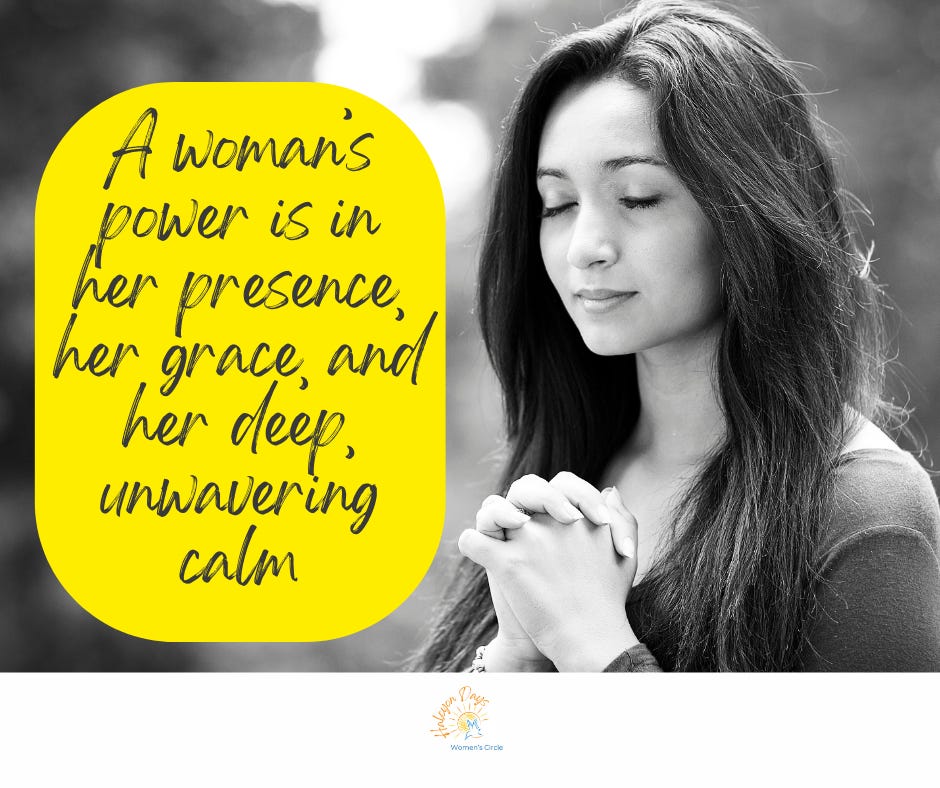
Life is full of chaos, demands, and expectations, and for women, the narrative that "a woman’s power is in her presence, grace, and calm" can feel like an elegant truth or a burdensome myth. At its best, this statement is a reminder of the profound inner strength women possess, beyond external achievements. At its worst, it risks becoming a neatly wrapped, Instagram-worthy soundbite that overlooks the complexities of real life. Let’s explore what this phrase can truly mean, how women can reconnect with it when they’re not "feeling it," and why it’s okay to reject it entirely.
The Essence of Presence, Grace, and Calm
When we talk about "presence," it’s not about being in the spotlight but rather the ability to fully occupy your space and life. Presence is about owning your worth, speaking your truth, and radiating authenticity in a way that invites respect without force. It’s not always loud or commanding—it’s rooted in quiet confidence.
Grace, in this context, is nothing to do with politeness or elegance. It’s the ability to navigate life’s ups and downs with resilience and dignity, allowing imperfections without succumbing to bitterness or chaos. Grace is the gentle strength that allows you to stumble and still move forward with purpose.
Calm, meanwhile, represents the capacity to center yourself in the midst of life’s storms. It’s not the absence of stress or conflict but the ability to find a steady anchor within yourself. Calm doesn’t mean you’re always unbothered—it means you trust yourself to face challenges with clarity.
These qualities—presence, grace, and calm—form a trio of strengths that help us women navigate the complexities of their lives with self-assurance.
They aren’t about perfection or about being passive but about drawing power from within, shaping how we respond to the world rather than letting it dictate us.
What If You’re Not Feeling It?
If you’re juggling a demanding career, raising kids, healing from trauma, or simply enduring the relentless pressures of daily life, grace and calm might feel unattainable. Here are some ways to reconnect with your power when you’re not “feeling it”:
Start with Presence:
Ground Yourself: Presence begins with grounding, whether through meditation, deep breathing, or simply pausing to acknowledge your feelings without judgment. Small rituals—lighting a candle, drinking tea mindfully, or taking a mindful walk—can help you feel rooted in your body and surroundings.
Set Boundaries: True presence requires space to breathe and think. Reclaim your time by saying no to obligations that drain you, creating room for self-reflection and clarity.
Cultivate Grace Through Compassion:
Be Kind to Yourself: Grace starts with self-compassion. You don’t have to have it all figured out. Allow yourself to feel messy, frustrated, or overwhelmed without adding guilt to the mix.
Learn from Mistakes: Rather than berating yourself for missteps, view them as opportunities for growth. Grace is about moving forward, not being flawless.
Find Calm Through Connection:
Simplify Your Focus: Overwhelm often comes from trying to do too much. Identify one priority to tackle instead of spreading your energy thin.
Lean on Your Circle: Calm isn’t always an individual achievement. A trusted friend, therapist, or supportive community can help you process emotions and regain balance.
Remember, these practices aren’t about becoming serene overnight. They’re about slowly cultivating habits that empower you to feel more anchored in your daily life.
The Flip Side: Why This Idea Can Be a Trap
While "presence, grace, and calm" can be inspiring, it’s also important to acknowledge when this ideal becomes harmful or oppressive. Women have historically been burdened with expectations to be nurturing, composed, and self-sacrificing, often at the expense of their own needs. When these virtues are treated as moral imperatives, they risk invalidating women’s full range of emotions.
It’s Unrealistic: No one can embody grace and calm all the time. Anger, frustration, and sadness are natural, healthy parts of life, and suppressing them doesn’t make you stronger.
It Enforces Gender Roles: While men are celebrated for being assertive or even aggressive, women are often praised for their "quiet strength," perpetuating stereotypes about what feminine power should look like.
It Can Feel Exclusive: Not everyone’s life allows for cultivating calm and grace, especially women facing systemic inequalities or caregiving responsibilities. Sometimes survival is the priority, not serenity.
It’s okay to call out the myth of perfection embedded in this statement. Women’s power is just as valid when it’s expressed through rage, vulnerability, or messy imperfection.
After all, strength doesn’t always look poised or controlled.
Redefining Power on Your Own Terms
Instead of striving to live up to the ideal of presence, grace, and calm, consider what power means to you. For some, it might mean speaking up against injustice, even if their voice shakes. For others, it might mean unapologetically prioritizing self-care. Your power might look like laughter after a hard day or saying, "I’m not okay, but I’m trying."
Power is multifaceted and deeply personal. It can be found in both resilience and rest, in stillness and movement, in joy and grief. Embracing your humanity in all its complexity is the truest expression of power.
"A woman’s power is in her presence, grace, and calm" is both an invitation and a challenge. At its best, it’s a gentle reminder of the strength women can draw from within, even in life’s messiest moments. At its worst, it risks becoming another standard for women to live up to, ignoring the chaotic beauty of real, imperfect lives.
The truth is, you don’t have to be graceful, calm, or perfectly composed to be powerful. Your power lies in showing up as you are—raw, real, and unapologetically human.
And that, more than any ideal, is worth celebrating