

I’ve always loved autumn.
The crisp air, the burnished colours, that earthy smell of damp leaves underfoot. There’s something reassuring about the slow exhale of nature after summer’s intensity — the soft permission to turn inward, light candles, and reach for a blanket.
But I know that this season can be a mixed blessing.
Because while I adore the magic — the golden light, the sense of slowing down — I also feel the drag. The darker mornings pull at my motivation. My energy dips before my calendar does. And as my body adjusts to the changing light and temperature, I can feel old hormonal patterns stirring: more fatigue, heavier moods, an extra layer of tenderness just under the skin.
It’s a reminder that the change in seasons isn’t just something happening around us — it’s happening through us.
And if you’re someone who struggles with fatigue, PMS, pain, or hormonal fluctuations, you might feel that shift more deeply even than most.
Why seasonal shifts hit some of us harder
It’s not your imagination — moving from summer into autumn and winter really does have a physiological impact.
Light, temperature, and even air pressure influence our hormones, neurotransmitters, and immune responses. Here’s what’s happening behind the scenes:
1. Less light = less serotonin.
As daylight hours shorten, serotonin levels dip — that’s the neurotransmitter linked to mood, appetite, and sleep. The result? More tiredness, carb cravings, and that vague, hard-to-shake heaviness.
2. Cortisol and melatonin lose their rhythm.
Our circadian rhythm — the internal clock that regulates sleep, hormones, and digestion — depends on light cues. When it’s dark in the mornings, cortisol (our “get up and go” hormone) doesn’t spike as easily. And when we spend more time indoors under artificial light, melatonin (our “wind down” hormone) doesn’t rise properly in the evening.
The whole system drifts out of sync, leaving us wired and tired.
3. Inflammation increases.
Cold weather and stress can increase inflammatory cytokines in the body, which may exacerbate conditions like endometriosis, PCOS, autoimmune pain, or fatigue. You might notice more bloating, stiffness, or skin flare-ups.
4. The emotional body mirrors the physical.
Just as trees release what they no longer need, this time of year invites us to shed emotionally — to let go of what’s been weighing us down. But letting go can be uncomfortable. It can feel like sadness or restlessness, even if nothing’s “wrong.”
The invitation of winter
There’s an ancient wisdom in the changing seasons and autumn, especially, carries a message of gentle surrender.
In Traditional Chinese Medicine, this is the season of the Lungs and Large Intestine — the organs of release. The lungs help us exhale, the large intestine helps us let go. Emotionally, this corresponds with grief and acceptance — the bittersweet art of clearing what’s finished, so that space can open for what’s next.
It’s the body’s natural rhythm of cleansing, conserving, and preparing.
But our modern world doesn’t make much room for that. We’re expected to stay in perpetual summer — productive, sociable, high-energy, high-achieving. So when our bodies start whispering “slow down”, we panic. We label it fatigue. Laziness. Lack of motivation.
But what if, instead, it’s wisdom?
What if your tiredness is a message from your body saying, “It’s time to soften.”
How to honour your body in the darker months
The key to navigating this shift isn’t to fight it — it’s to move with it.
To create small, intentional rituals that bring you back into rhythm, even when the world feels out of sync.
Here are a few ways to start…
Light before screen
Before you check your phone in the morning, step outside — even for two minutes.
Natural daylight, especially within the first hour of waking, tells your brain to switch on serotonin and cortisol. This one simple action helps regulate your circadian rhythm, improve mood, and balance hormones.
If getting outside isn’t possible, sit by a window or use a daylight lamp — research shows this can reduce fatigue and symptoms of Seasonal Affective Disorder.
Personal tip: I let the cat out first thing in the morning's when I open the door just stand there - inside the house usually - and let the cold hit my face. I notice the colour of the sky or the noises of the creatures in the flowerbed, watch my breath in the air, and remind myself — I’m part of this season, not separate from it.
Eat with the earth
Our bodies crave grounding foods in autumn — and there’s science behind that.
Warm, cooked meals help preserve digestive energy (what TCM calls ‘Spleen Qi’), while seasonal produce like squash, beetroot, and root vegetables nourish the gut and stabilise blood sugar.
If you struggle with PMS or endo pain, this is especially important — steady blood sugar means steadier oestrogen and progesterone balance.
And emotionally, there’s something powerful about aligning your food with the season. It’s a way of saying to your body, I’m listening. I’m adapting. I’ve got you.
Build in rest like an appointment
Rest isn’t what you do after the to-do list. It’s what enables the list.
Fatigue in winter is not a flaw — it’s your body asking to recalibrate.
Try this: for one week, schedule one 20-minute “rest slot” every day.
That might be a walk, a lie-down, a cup of tea without multitasking, or ten slow breaths before dinner.
Consistency — not duration — is what retrains your nervous system to feel safe slowing down.
Check your emotional temperature
Before you launch into your day, pause to ask: What am I carrying today? What can I put down?
This simple check-in stops emotional overload from turning into physical tension.
If you feel irritable, anxious, or low, it might not mean something’s wrong — it might mean your nervous system is simply overloaded.
Support it with gentle grounding: feet on the floor, shoulders relaxed, slow exhale.
You’ll feel your energy soften within moments.
Sync your inner rhythm with the outer one
Nature is slowing down — and so should we.
If you menstruate, notice how your cycle mirrors the seasons: your bleed (winter), follicular (spring), ovulation (summer), luteal (autumn).
If you don’t bleed, use the lunar cycle: new moon to full moon, darkness to light.
When you live in alignment with these rhythms, you naturally stop pushing against yourself.
You start working with the energy that’s available — and that creates ease.
Reimagine movement
Your energy will change — and so should your exercise.
Instead of rigid routines, follow your body’s cues.
Try walking or yoga during your low-energy days, and keep the higher-intensity workouts for when you naturally feel brighter.
Research shows that women who align exercise with their hormonal and seasonal rhythms experience better metabolism and fewer stress injuries.
You don’t need to stop moving — just stop fighting.
Let go — physically and emotionally
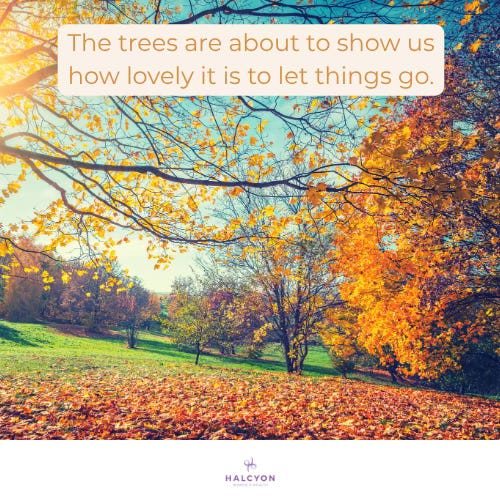
As the trees release their leaves, ask yourself: What am I ready to release?
Maybe it’s an old habit, a toxic obligation, or an identity that no longer fits.
You don’t need to solve it — just acknowledge it.
If journaling helps, write this prompt:
“This season, I am letting go of…”
“I am ready to invite in…”
Letting go creates space. And nature abhors a vacuum — so something beautiful will fill it.
The nervous system’s role
The shift to winter asks more of your parasympathetic nervous system — the “rest and digest” side that governs healing and repair.
But when you’re constantly pushing through fatigue or ignoring your body’s cues, the sympathetic (“fight or flight”) system takes over — keeping cortisol high and your energy low.
That’s why practices like gentle breathwork, warmth, and connection matter so much now. They signal safety. And safety is the foundation for hormone balance, digestion, and immune resilience.
For me, autumn is both a comfort and a challenge.
I love my cardigans and candles, the smell of woodsmoke, the sense of permission to slow down. But I also notice how much harder it is to get up when the mornings are dark. How my motivation wobbles when my energy dips.
I’ve learned not to fight it. I make my morning routine a ritual, give myself permission to nap if I need it, and to lean into soups, teas, and blankets rather than guilt.
Because the goal isn’t to have boundless energy all year round — it’s to live in rhythm with the energy we have.
This week’s actions
Morning light, before screens.
Two minutes outside within an hour of waking. Even on grey days.Check your body temperature.
Keep warm — especially your feet and lower back. In TCM, cold stagnates energy and worsens menstrual pain and fatigue. Gran was right - your vest is good for you!Eat seasonally.
Root veg, warming spices, slow-cooked stews. Avoid skipping meals — your hormones need fuel.Journal one thing to release and one thing to invite.
Keep it simple. Maybe you’re releasing overwork and inviting rest.Connect.
Winter can be isolating. Schedule a chat, a walk, or a cuppa with someone who feels safe. Social connection boosts oxytocin and serotonin — two powerful antidotes to the winter blues.
A gentle reminder
You don’t need to fight the darkness.
You just need to bring your own light — in the form of rest, warmth, nourishment, and connection.
Your body is not resisting the season. It’s responding to it.
Let it.
Because every cycle — whether lunar, menstrual, or seasonal — carries the same truth:
Rest is not regression. It’s preparation.
And just like the trees, you are gathering strength for your next spring.
Absolutely love this - i feel exactly the same way and you've captured it so well! 🍂🧡✨️